Custom Kitchen Cabinets That Fit Your Life
A kitchen can look beautiful in a showroom and still frustrate you at home. The pantry may be too shallow, the corner cabinet may swallow cookware, or the island may become a cluttered landing zone. Custom kitchen cabinets begin with the way you actually use your space, creating storage, proportion, and finish details that support your daily routine.
For homeowners planning a meaningful kitchen remodel, cabinetry is more than a backdrop for countertops and appliances. It sets the rhythm of the room. It determines where dishes live, how easily you can prepare a meal, and whether the kitchen feels calm when family and friends gather.
Why Custom Kitchen Cabinets Change the Entire Room
Stock cabinets are built around standard sizes. They can be a smart option for certain budgets and straightforward layouts, but they often leave unused gaps, filler panels, or awkward compromises. Semi-custom cabinetry adds more flexibility, yet it may still limit dimensions, interior configurations, and finishing choices.
Custom cabinetry is designed for the room you have and the life you want to live in it. A narrow wall can become useful storage instead of dead space. A tall cabinet can be sized around a refrigerator or built-in oven. A window can be framed with cabinetry that feels intentional rather than forced.
That level of planning matters especially in older Rochester-area homes, where walls may be uneven and kitchen footprints rarely follow a perfect template. The goal is not to fill every inch with cabinets. It is to make each cabinet earn its place while preserving a kitchen that feels open, balanced, and easy to move through.
Custom work also gives you greater control over the visual character of the room. You may want clean, flat-panel doors for a contemporary kitchen, a warm painted finish with classic detailing, or natural wood grain that brings depth to a brighter space. Cabinet style should work with the home rather than chase a short-lived trend.
Start With How You Use the Kitchen
The best cabinet plan does not begin with door color. It begins with questions. Who cooks most often? Do you host large holidays? Are lunches packed in a rush each morning? Is the kitchen a quiet retreat for two people or the center of a busy family home?
A homeowner who loves baking may benefit from deep drawers for mixers and baking sheets, plus a dedicated pantry zone for ingredients. Someone who entertains frequently may prefer a beverage station away from the main prep area, keeping guests out of the cook’s path. Families often appreciate a drop zone near an entry, with concealed storage for backpacks, chargers, and everyday clutter.
This is where thoughtful remodeling has an advantage over choosing cabinets in isolation. Cabinetry, appliances, lighting, tile, and countertops should be considered together. A beautiful range hood can become a focal point, but it needs surrounding cabinets that give it the right scale. A dramatic tile backsplash deserves a layout that avoids unnecessary visual interruptions.
Storage Should Feel Effortless
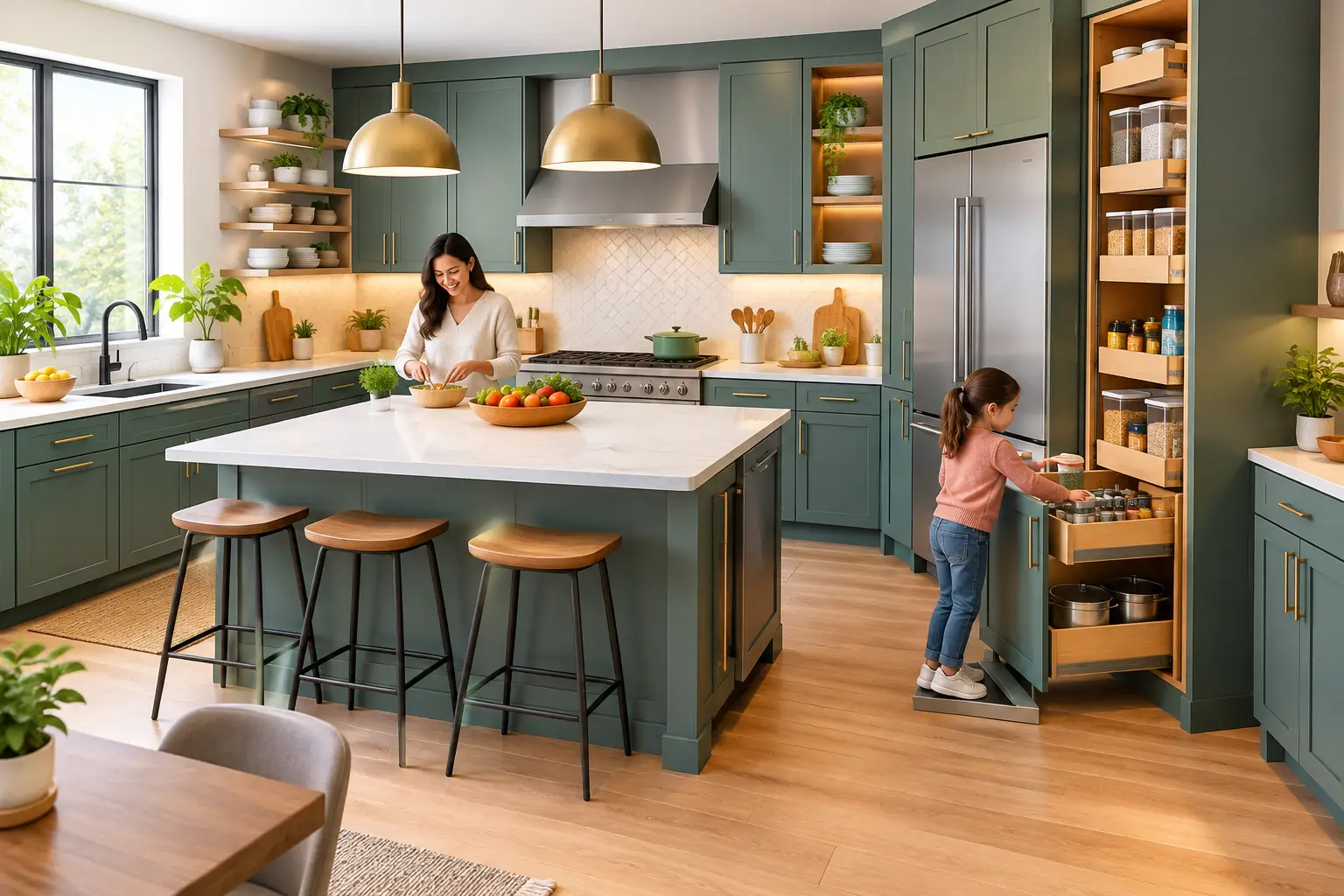
A well-designed kitchen does not require you to bend, reach, or search for everyday items. Deep drawers are often more useful than lower cabinets with fixed shelves because they bring pots, pans, and small appliances into view. Pullout trays can improve access in pantry cabinets, while narrow vertical storage can organize cutting boards and sheet pans.
Corner areas deserve special attention. Depending on the layout, a corner may be best used for a specialized pullout, a traditional lazy Susan, or a simple cabinet that stores less frequently used pieces. There is no single right answer. The best option depends on your budget, the cabinet construction, and what you plan to keep there.
Consider the small details, too. Trash and recycling pullouts keep a busy prep area cleaner. Drawer dividers prevent utensils from migrating into a single messy pile. A cabinet designed for pet bowls, a charging drawer, or a hidden microwave can make the room feel more tailored to your household without making it feel overly complicated.
Design for the Room, Not Just the Cabinets
Cabinets should support a kitchen layout that works from morning coffee through dinner cleanup. The relationship between the sink, refrigerator, cooktop, and prep surfaces matters, but so does the space around them. An oversized island can look impressive on a plan while making the room feel cramped once stools, open appliances, and people are in the picture.
A skilled remodeling team evaluates clearances, circulation, appliance doors, and the amount of usable counter space before finalizing cabinet dimensions. This planning protects the investment in the details homeowners care about most: a generous island, a professional-style range, statement lighting, or a walk-in pantry.
Ceiling height also changes the cabinet conversation. Taking upper cabinets to the ceiling can create a more finished, architectural look and reduce dust-catching space above. It may also add valuable storage. In other kitchens, leaving room for a painted soffit, display shelving, or a distinct hood feature provides better proportion. The right choice depends on the room’s scale and the overall design direction.
Choose Materials and Finishes for Real Life
The most appealing finish is one you will still enjoy after years of use. Painted cabinets can deliver a refined, versatile look, from crisp white to deep green, navy, or charcoal. Natural wood can add warmth and variation that makes a kitchen feel established and inviting. Stained finishes often suit homeowners who want texture and depth without a high-contrast palette.
Durability is not just about selecting a tough material. It also comes from quality construction, reliable hardware, and a finish appropriate for the location. Cabinet doors near a busy range, sink, or dishwasher face more moisture, heat, and frequent cleaning than a built-in in a quiet dining room.
Door style should be equally intentional. Shaker doors remain popular because they work across many home styles, but they are not the only choice. Slimmer profiles can feel more modern, while raised panels or detailed edges can complement traditional architecture. Hardware may be a small percentage of the project cost, yet it has an outsized effect on the final look and daily feel of the kitchen.
Where to Invest and Where to Be Practical
Custom cabinetry allows you to direct the budget toward the features that matter most. Many homeowners prioritize drawer bases, a well-organized pantry, quality hinges and slides, and a carefully designed island. These are the elements touched every day.
Not every cabinet needs an elaborate interior accessory. Specialty pullouts can be useful, but too many can consume budget without improving your routine. Open shelving can create a light, collected look, although it requires regular styling and cleaning. Glass-front doors add visual interest, but they work best when you are comfortable keeping what is inside organized.
It is also wise to plan for the appliances you intend to purchase, even if final selections are still being made. Refrigerator depth, range width, ventilation requirements, and dishwasher placement all influence cabinet sizes and panel details. Adjusting these decisions late can lead to avoidable delays or design compromises.
A Collaborative Process Delivers Better Results
A custom kitchen is a series of connected decisions, not a cabinet order. During the consultation and design process, homeowners should expect clear conversations about goals, wish lists, limitations, investment range, and priorities. Good guidance turns broad ideas such as “more storage” or “a luxury kitchen” into specific solutions that can be built well.
At Home Custom Remodeling, that means looking beyond individual cabinets to create a finished space that feels cohesive. The cabinet plan should complement the tilework, lighting, flooring, and architectural details around it. Just as importantly, construction should be managed with care so the refined result on the design plan becomes a kitchen you are proud to use every day.
Before moving forward, gather inspiration, but pay attention to what you respond to repeatedly. It may be a warm wood island, a hidden pantry door, generous drawers, or a calm painted palette. Those preferences reveal more about your future kitchen than a single trend ever could.
The right custom cabinetry does not ask you to change your habits to fit the room. It gives your home a more beautiful way to support the life already happening inside it.